
In a world where takeout reigns supreme and microwave meals are the norm, cooking classes offer a delicious escape. Imagine trading in those soggy delivery boxes for a chef’s apron, where culinary creativity meets a dash of fun. Whether you’re a kitchen novice or a self-proclaimed grill master, these classes promise to spice up your cooking game and maybe even save you from a life of frozen dinners.
Picture this: you’re chopping onions like a pro while the instructor shares tips that make you feel like Gordon Ramsay—minus the yelling, of course. Cooking classes not only teach essential skills but also serve up a side of laughter and camaraderie. So why not swap your takeout menu for a spatula? Dive into the world of flavors and techniques that’ll have you impressing friends and family in no time.
Overview of Cooking Classes
Cooking classes offer a hands-on approach to culinary education, catering to various skill levels. Aspiring chefs benefit from structured lessons that cover essential techniques such as knife skills, flavor pairing, and cooking methods. Each class typically includes both instruction and practice, allowing participants to create dishes in a guided environment.
Instructors often possess professional culinary backgrounds, providing valuable insights and tips. Participants gain exposure to different cuisines, enhancing their knowledge and appreciation for diverse ingredients. Group settings encourage social interaction, making class attendance not only educational but also enjoyable.
Classes vary from one-time workshops to multi-week courses. Some focus on specific themes, such as vegetarian cuisine, baking, or international dishes. For individuals seeking flexibility, online cooking classes offer convenience, allowing learners to participate from home.
Skill development remains a core focus of cooking classes. Participants can expect to master techniques that elevate their home cooking, making meals more flavorful and visually appealing. Attending classes allows for real-time feedback, which further enhances learning effectiveness.
Ultimately, cooking classes provide an enriching experience that fosters creativity and confidence in the kitchen. As individuals learn to cook, they also cultivate a greater appreciation for meals made from scratch. Many graduates of these classes find joy in preparing meals for family and friends, transforming the culinary landscape of their households.
Types of Cooking Classes
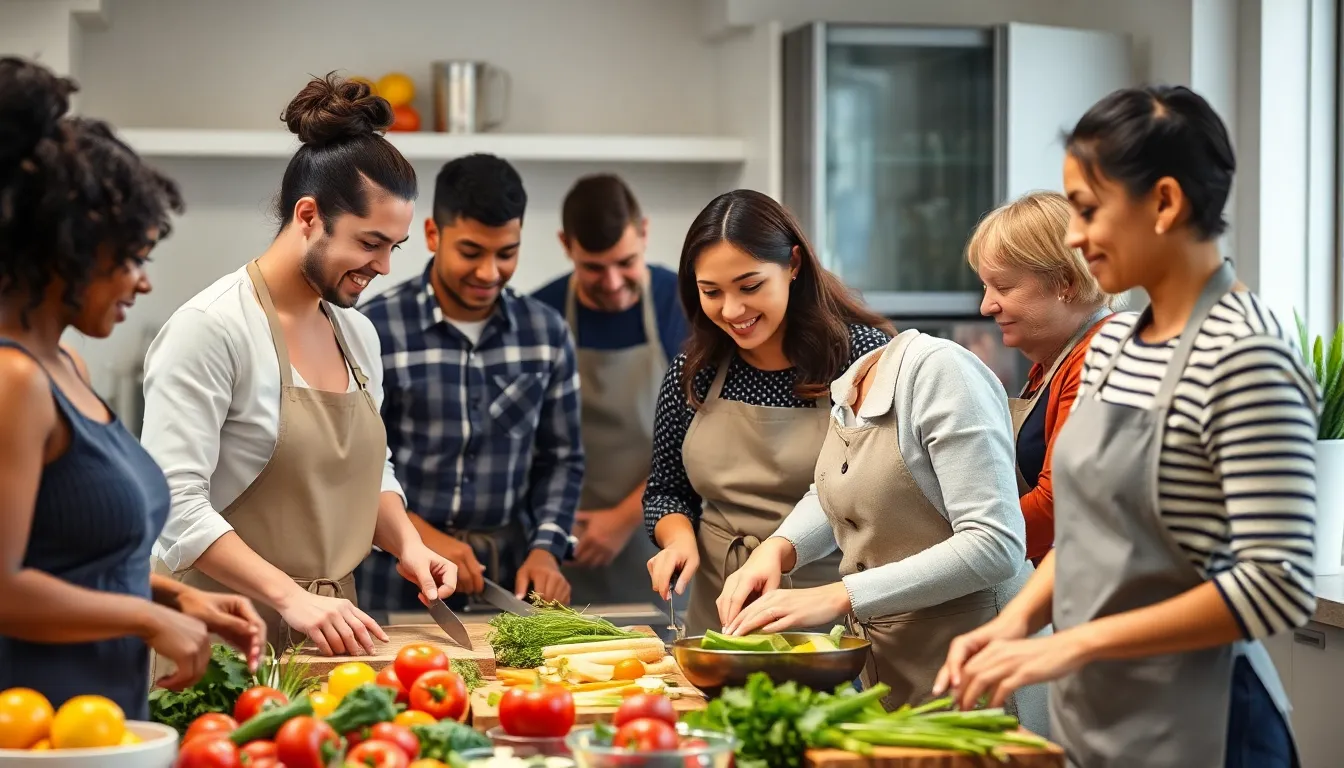
Cooking classes come in various formats, each focusing on unique skills and cuisines. Understanding the types can help participants choose what suits them best.
Culinary Techniques
Culinary techniques classes emphasize skill development. Participants learn essential methods such as knife skills, sautéing, and sauce preparation. Instructors demonstrate techniques, then guide students through hands-on practice. These classes cater to all skill levels, making them suitable for beginners seeking foundational skills or experienced cooks wanting to refine their techniques. Participants gain confidence in preparation and presentation, enhancing their overall cooking experience.
Ethnic Cuisine
Ethnic cuisine classes immerse participants in diverse culinary traditions. Each session explores a specific culture, covering ingredients, history, and cooking methods. Participants may learn to craft Italian pasta, prepare Indian curries, or cook Thai seafood dishes. The focus on authenticity allows students to appreciate and replicate traditional flavors. Classes often include tasting sessions, creating opportunities for social interaction and exploration of new flavors. Experimenting with various ethnic cuisines broadens culinary horizons and enhances creativity in meal preparation.
Baking and Pastry
Baking and pastry classes concentrate on sweet and savory baked goods. Students discover techniques for creating desserts, breads, and pastries from scratch. Instruction often covers essential skills such as dough preparation, frosting application, and decorating. Classes encourage experimentation with flavors and textures, inviting creativity. Participants often leave with a collection of recipes and baker’s tips, enabling them to recreate delightful treats at home. Engaging in baking fosters a satisfying sense of achievement and can impress family and friends with delectable results.
Benefits of Taking Cooking Classes
Cooking classes offer numerous advantages for individuals looking to elevate their culinary experience.
Skill Development
Skill development emerges as a key benefit of cooking classes. Participants learn essential techniques such as knife skills, sautéing, and sauce preparation. These classes cater to various skill levels, ensuring everyone grows at their own pace. Engaging with experienced instructors allows students to receive personalized feedback, enhancing their learning process. Mastering new skills also boosts confidence in the kitchen, making preparation of complex dishes more manageable. As skills improve, individuals can create more intricate recipes and experiment with flavors. Overall, structured lessons significantly enhance culinary capabilities.
Social Interaction
Social interaction plays a crucial role in cooking classes. Group settings foster camaraderie among participants, encouraging teamwork and collaboration. Sharing the cooking experience with others generates a sense of community. As friends and strangers bond over shared tasks, they enjoy laughing and learning together. This atmosphere often leads to lasting friendships, turning cooking into a fun, social activity. Socializing while cooking can make the experience less intimidating, especially for beginners. Participants leave feeling more connected, having shared memorable moments with others who appreciate food.
Health and Nutrition
Health and nutrition represent significant advantages of cooking classes. Participants gain hands-on experience preparing fresh, wholesome ingredients. Classes often emphasize the importance of balanced nutrition and healthy cooking techniques. Learning how to identify quality produce and incorporate nutritious items into meals fosters smarter shopping habits. Increased awareness of portion sizes and healthier cooking methods supports better eating habits. Individuals who take cooking classes often find themselves making more informed decisions about their meals. This awareness transforms their relationship with food and promotes overall well-being.
How to Choose the Right Cooking Class
Choosing the right cooking class involves considering various factors that contribute to a rewarding culinary experience. Key aspects include location, accessibility, class size, and instructor experience.
Location and Accessibility
Location matters significantly when selecting a cooking class. Choose a venue that’s convenient to reduce travel time. Urban areas often offer diverse options, while rural locations may provide unique culinary experiences. Additionally, assess accessibility features such as transportation availability and parking. Online classes present an excellent alternative for those who prefer learning from home. Many individuals find that accessibility improves engagement, allowing for better focus during lessons.
Class Size and Instructor Experience
Class size influences the learning environment in cooking classes. Smaller groups usually foster more interaction between participants and instructors. Opt for classes with manageable sizes to receive personalized guidance. Instructor experience directly impacts the quality of instruction. Look for classes led by professionals with strong culinary backgrounds. Instructors with industry experience often share valuable insights and techniques. Evaluating both class size and instructor qualifications helps ensure a productive and enjoyable cooking experience.
Cooking classes offer an exciting way to elevate culinary skills while fostering social connections. They provide a unique environment where individuals can learn essential techniques and explore diverse cuisines. By participating in these classes, anyone can transform their approach to cooking and discover the joy of creating meals from scratch.
The benefits extend beyond just skill development. Participants gain confidence in the kitchen and enjoy a sense of community with fellow food enthusiasts. Whether it’s a one-time workshop or an extensive course, cooking classes can inspire creativity and enhance overall well-being. Embracing this culinary journey not only enriches personal cooking experiences but also allows individuals to share their newfound skills with loved ones.