
In a world where couch cushions seem to have a gravitational pull, fitness challenges are the ultimate escape route. They’re not just about breaking a sweat; they’re about breaking free from the monotony of everyday life. Whether it’s a 30-day squat challenge or a plank-off with friends, these challenges add a sprinkle of fun to the grind of getting fit.
Overview of Fitness Challenges
Fitness challenges add excitement to exercise routines and can foster a sense of community. Participating in challenges strengthens commitment to fitness goals, whether through individual endeavors or group initiatives. Those who engage in them often experience increased motivation due to friendly competition.
Various formats exist for fitness challenges. For example, options like monthly workout challenges or step competitions encourage participants to stay active. Engaging in these activities promotes accountability, as individuals track progress and celebrate milestones together.
Many platforms support fitness challenges. Online groups and apps provide structured programs, allowing participants to connect and share achievements. Tools like fitness trackers enhance the experience by facilitating goal tracking and providing data-driven insights.
Challenges appeal to a wide range of fitness levels. Beginners benefit from structured introductory challenges, while seasoned athletes can seek more intensive options. Adjusting difficulty ensures that everyone finds an appropriate challenge that aligns with their fitness journey.
Overall, fitness challenges not only contribute to improved physical health but also enhance social connections. They encourage camaraderie and teamwork, creating an enjoyable atmosphere for everyone involved. Engaging in these experiences allows individuals to achieve personal bests while having fun.
Types of Fitness Challenges
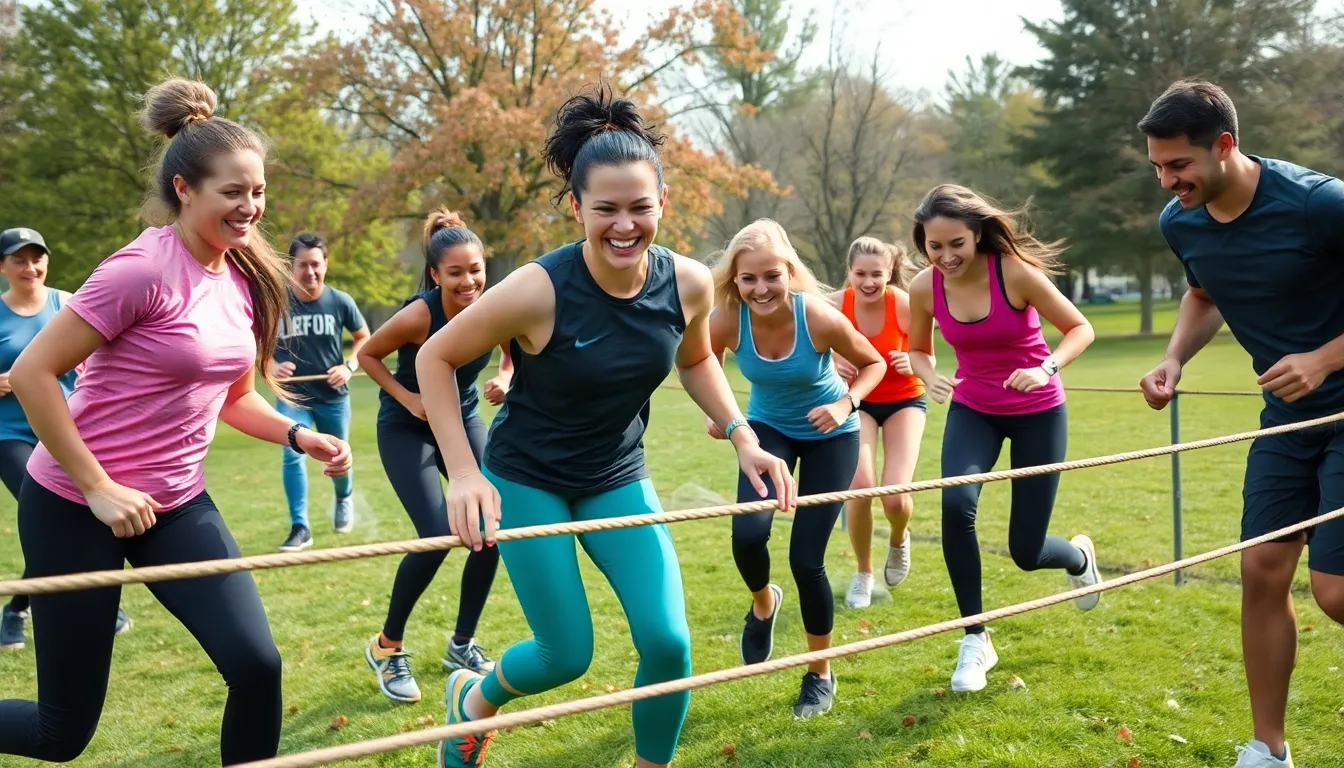
Fitness challenges come in various forms, catering to different preferences and fitness levels. Below are two main categories of fitness challenges: individual challenges and team challenges.
Individual Challenges
Individual challenges focus on personal fitness goals. Competitors set their targets and timelines, such as completing a 30-day yoga program or achieving a specific number of push-ups daily. These challenges emphasize self-discipline, encouraging participants to forge habits that promote long-term fitness. Customization is key; individuals can tailor their workouts to suit their unique needs and schedule. Online platforms often provide resources, such as workout videos and guides, supporting personal journeys. Community groups then offer a space for sharing progress, creating a sense of accountability.
Team Challenges
Team challenges foster camaraderie among participants. Groups compete against one another in various formats, like relay races or group step challenges. Participants motivate each other and can benefit from diverse fitness strategies. Each team member contributes to the overall success, creating a shared sense of purpose. Events like fitness boot camps and charity runs often bring teams together to reach common objectives. Online platforms facilitate communication, allowing teams to track performance and celebrate achievements collectively. Team challenges effectively blend social interaction with fitness, enhancing the overall experience.
Benefits of Participating in Fitness Challenges
Fitness challenges offer various advantages that motivate participants to stay active. Improved physical health serves as a primary benefit, with increased endurance, strength, and flexibility often resulting from consistent participation. Personal growth emerges as individuals set and achieve fitness goals, boosting self-esteem and confidence.
Social connections play a significant role in enhancing the experience. Participants engage with others who share similar interests, fostering friendships and camaraderie. Team challenges, in particular, promote teamwork, creating a supportive environment that enhances motivation. Friendly competition further encourages participants to push their limits, adding excitement to workouts.
Flexibility in options exists for all fitness levels. Challenges can be adjusted, allowing beginners to gradually increase their intensity while veterans can push their boundaries. Options like 30-day programs or weekly competitions cater to diverse interests, ensuring everyone finds a suitable fit.
Accountability stiffens among participants as they share their progress on platforms and apps. Regular check-ins and updates nurture commitment to personal fitness goals. Tracking progress not only highlights achievements but also enables individuals to celebrate milestones together, encouraging further participation.
Incorporating fun elements into routines makes exercise enjoyable. Fitness challenges introduce new exercises and formats, breaking the monotony of traditional workouts. Engaging with exciting activities keeps participants interested and committed to their fitness journeys.
Overall, fitness challenges create enriching experiences. They improve physical health, strengthen social bonds, and boost motivation, making the journey towards fitness both fulfilling and fun.
How to Choose the Right Fitness Challenge
Choosing the right fitness challenge involves aligning it with personal objectives and fitness capabilities. Participants can effectively set themselves up for success with targeted approaches.
Assessing Personal Goals
To ensure a fulfilling experience, participants must identify their fitness goals first. Some may seek weight loss, while others aim for strength building or improved flexibility. Specificity in goals enhances motivation. For example, committing to a 30-day yoga challenge can lead to improved core strength. Setting measurable milestones provides a clear progression path. Participants should also consider the timeframe; some may prefer short-term challenges that foster immediate results, while others benefit from long-term projects that allow gradual improvement. Identifying these factors helps in selecting a challenge that resonates with individual aspirations.
Considering Fitness Levels
Understanding fitness levels is crucial when choosing a challenge. Beginners often find value in low-intensity activities like walking or gentle stretching. On the other hand, advanced participants might opt for high-intensity challenges, such as circuit training or marathon preparation. Selecting a challenge tailored to one’s current capabilities minimizes the risk of injury. For those new to fitness, starting with a basic step count challenge can build confidence and endurance. Evaluating past experiences with exercise helps in making informed decisions. Effectively matching a challenge with individual fitness levels allows for a balanced progression in physical activity.
Tips for Success in Fitness Challenges
Start with setting clear goals. Define specific, measurable targets, such as losing a certain number of pounds or completing a set number of workouts each week. Pick challenges that align with individual fitness levels to ensure optimal performance and enjoyment.
Incorporate variety. Engage in different activities to maintain interest and challenge various muscle groups. Mixing workouts, such as strength training, cardio, and yoga, can keep motivation high and prevent boredom.
Track progress diligently. Use fitness apps or journals to record achievements and monitor improvements. Consistent tracking reinforces commitment and showcases progress over time. Celebrate small victories along the way to stay inspired.
Stay accountable through social support. Join group challenges or engage friends and family to participate alongside. Sharing experiences fosters a sense of community and encourages persistence in reaching targets.
Adapt as necessary. Recognize that flexibility is key in fitness journeys. Modify workouts when required to prevent burnout or injury. Listening to the body can help maintain enthusiasm and facilitate long-term participation.
Focus on nutrition. Eating a balanced diet enhances performance and recovery. Prioritize whole foods, adequate hydration, and proper portion sizes to fuel workouts effectively.
Seek expert guidance. A personal trainer or fitness coach helps craft tailored workout plans and provides valuable insights. Learning from experienced professionals can lead to more efficient progress and help avoid common pitfalls.
Embrace the process. Enjoy the journey toward better fitness and well-being. Engaging fully in fitness challenges cultivates a positive mindset and enhances overall experiences in health and fitness.
Fitness challenges offer an exciting way to invigorate workout routines while fostering community engagement. By blending fun with fitness, they motivate individuals to push their limits and achieve personal goals. Whether participating in individual or team challenges, the sense of accomplishment and camaraderie can lead to lasting friendships and improved well-being.
Choosing the right challenge aligns personal objectives with fitness capabilities, ensuring a rewarding experience. With the support of online platforms and apps, tracking progress and sharing achievements becomes seamless. Embracing these challenges not only enhances physical health but also cultivates a positive mindset, making the journey toward fitness enjoyable and fulfilling.